The quick answer
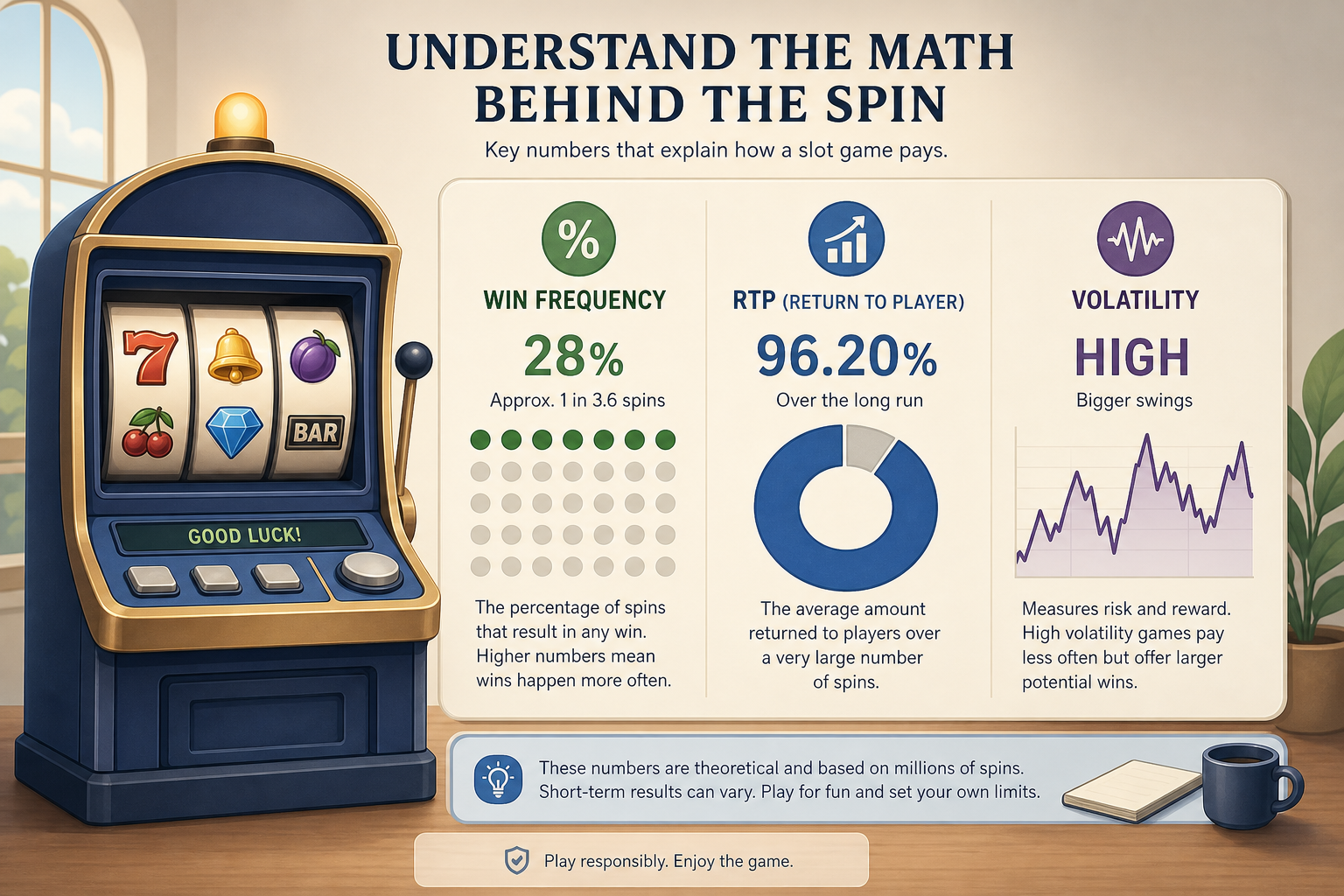
Hit frequency at a sweeps casino is the percentage of spins that produce any win, no matter how small. A slot with 30% hit frequency lands a winning result on about 3 of every 10 spins over the long run. It is separate from RTP and volatility, and higher does not automatically mean better.

Quick Take
- Hit frequency means the percentage of spins that produce any winning combination.
- It does not measure win size. A 0.2x return and a 100x return both count as hits.
- Hit frequency is independent of RTP, though the two work together in how a slot feels.
- High hit frequency usually points to lower volatility: more frequent, smaller wins.
- Many high-frequency “wins” can still be below your bet size, creating a net loss that feels like progress.
- Most slots sit around 20%–35%, with outliers below 15% or above 45%.
What hit frequency actually means
Hit frequency is simple on the surface: it is how often a slot produces a winning combination. If a game has a 30% hit frequency, then roughly three out of every ten spins return some payout when measured across a very large number of spins.
The important word is some. Hit frequency does not care whether the payout is smaller than your bet, equal to your bet, or a rare oversized win. Every one of those outcomes counts as a hit.
That is why the metric can be useful and misleading at the same time. It tells you how often the reels will celebrate. It does not tell you whether your bankroll is improving.
Hit frequency vs. RTP vs. volatility
Players often mix these terms together, but they describe different parts of a slot’s math. You need the full picture to understand how a sweeps casino slot is likely to feel.
| Property | What it measures | Best way to think about it |
|---|---|---|
| RTP | The long-run percentage of wagers returned to players | Overall return across millions of spins |
| Volatility | How wins are distributed | Steady small wins vs. rare larger wins |
| Hit frequency | The percentage of spins that produce any win | How often a spin pays something |
| Average win size | The average payout on winning spins | How meaningful the wins tend to be |
| Max win | The largest possible payout | The ceiling, usually a rare event |
Two slots can have the same RTP and feel completely different. One may hit often with tiny returns. Another may go quiet for longer stretches, then produce larger wins. Hit frequency helps explain that difference.
What is a good hit frequency?
There is no universal “best” hit frequency. The right range depends on the type of session you actually enjoy and how disciplined you are with your bankroll.
| Hit frequency range | Vibe | What sessions tend to feel like |
|---|---|---|
| Below 15% | Very rare wins | Long dry spells, usually tied to very high volatility |
| 15%–25% | Sparse wins | Most spins lose; common in higher-volatility slots |
| 25%–35% | Standard | A balanced, industry-typical experience |
| 35%–45% | Frequent wins | Wins show up regularly, but many may be small |
| Above 45% | Very frequent wins | Close to half of spins may pay something, often below bet size |
A 40% hit frequency slot can feel lively because something happens often. But if most of those hits are 0.2x or 0.5x your bet, your balance can still slide down while the game keeps showing “wins.”
Why hit frequency matters for bankroll management
Hit frequency changes the emotional rhythm of a session. That matters because most bankroll mistakes are not made on a spreadsheet. They happen when a game feels hot, cold, unfair, or “due.”
High hit frequency can blur losses
Frequent small wins can keep you engaged even when you are losing overall. Your brain registers the reward, but your balance tells the more honest story. If you tend to keep playing because a slot “keeps hitting,” pay close attention to whether those hits are actually larger than your bet.
Low hit frequency can trigger chasing
Lower hit frequency often means longer stretches without a payout. That can tempt players to raise bet size to “get it back.” If dry spells make you impatient, a very low-frequency slot may be harder to manage responsibly.
The practical takeaway: match the slot style to your own habits. If you chase after droughts, frequent smaller hits may be easier to sit with. If you overstay when a game keeps flashing wins, lower hit frequency may give you clearer stopping points.
Where to check hit frequency
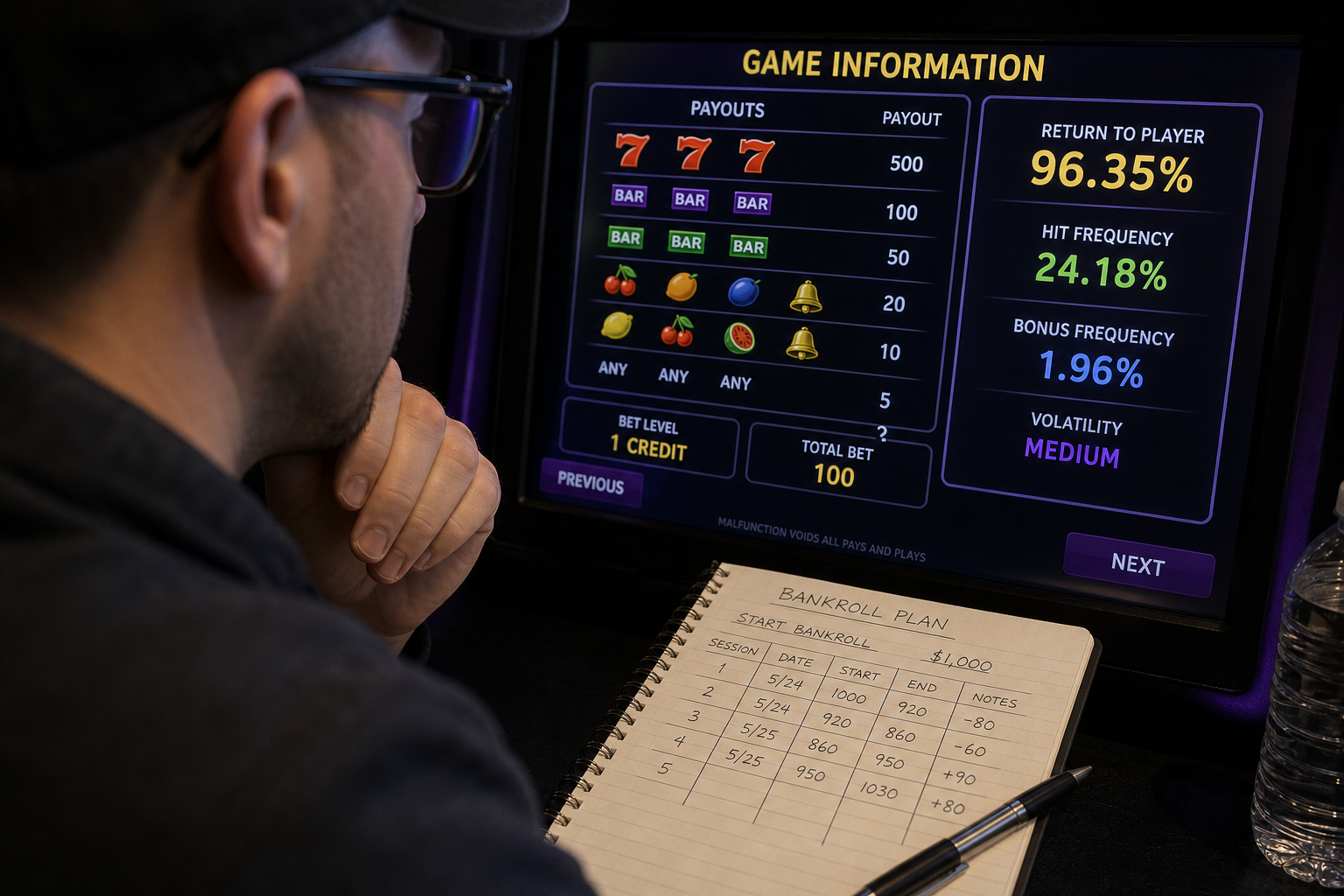
Hit frequency is not always displayed as clearly as RTP, but it is often available if you know where to look.
- In-game info screen: Check the “i,” “info,” or help section inside the slot. It may be labeled hit frequency, win frequency, or hit rate.
- Official studio page: Some major studios publish math details for individual games. Search the slot name with “hit frequency” or “math sheet.”
- Slot statistics databases: Community-run databases sometimes list hit frequency when the publisher makes it available.
If you cannot find it, you can estimate it informally by counting winning spins out of 100 or more spins. That will not be perfect, but it can give you a feel for whether the game is frequent, standard, or sparse.
Comparison checklist: how to read a slot before you play
| Question to ask | Why it matters |
|---|---|
| What is the hit frequency? | Tells you how often any win should appear over time. |
| What is the RTP? | Shows the long-run return percentage, not the short-term result. |
| What is the volatility? | Helps you anticipate dry spells and swing size. |
| Are frequent wins smaller than the bet? | This is where high hit frequency can feel better than it performs. |
| Does this match my bankroll style? | The “best” math profile is the one you can play without chasing or overstaying. |
What to do next
Pick one slot you have played recently and look for its hit frequency in the in-game info screen or on the studio’s official page. Then compare that number with how the session felt.
- If wins felt too rare, you may prefer a higher hit frequency game.
- If wins were constant but your balance still dropped, you have seen the high-frequency trap in action.
- Next time, check hit frequency alongside RTP, volatility, and average win size instead of judging by one number.
Want More?
Want analysis like this in your inbox? Get the Sweeps Flow weekly digest. Sign up at sweepsflow.com/register.
FAQs
Is a higher hit frequency better at a sweeps casino?
Not automatically. Higher hit frequency means more frequent wins, but those wins can be small. A 50% hit frequency slot where most wins are 0.2x your bet can be less useful than a 25% hit frequency slot with larger average wins. Always read hit frequency together with RTP and average win size.
Can hit frequency change based on operator settings?
No. Hit frequency is part of the slot’s math model. The same slot has the same hit frequency at every operator. Operators may be able to choose RTP within an allowed range, but hit frequency stays fixed.
Why do high hit frequency slots feel rigged when most wins are tiny?
Because tiny wins still feel like wins. The brain responds to the reward moment, even when the payout is below your bet. That can create the feeling of winning while your bankroll slowly erodes. That is the math working as designed, not proof that the slot is rigged.
Are progressive jackpot slots high or low hit frequency?
They are usually low hit frequency. Progressive jackpot games concentrate more payout potential into rare big hits, which often means longer dry spells in the base game. Many progressive slots sit around the 15%–25% range.
How does hit frequency relate to volatility?
They are closely related but not identical. Hit frequency measures how often a win appears. Volatility describes how payouts are distributed. In practice, high hit frequency usually means lower volatility with smaller, more frequent wins, while low hit frequency usually means higher volatility with rarer, larger wins.

Error