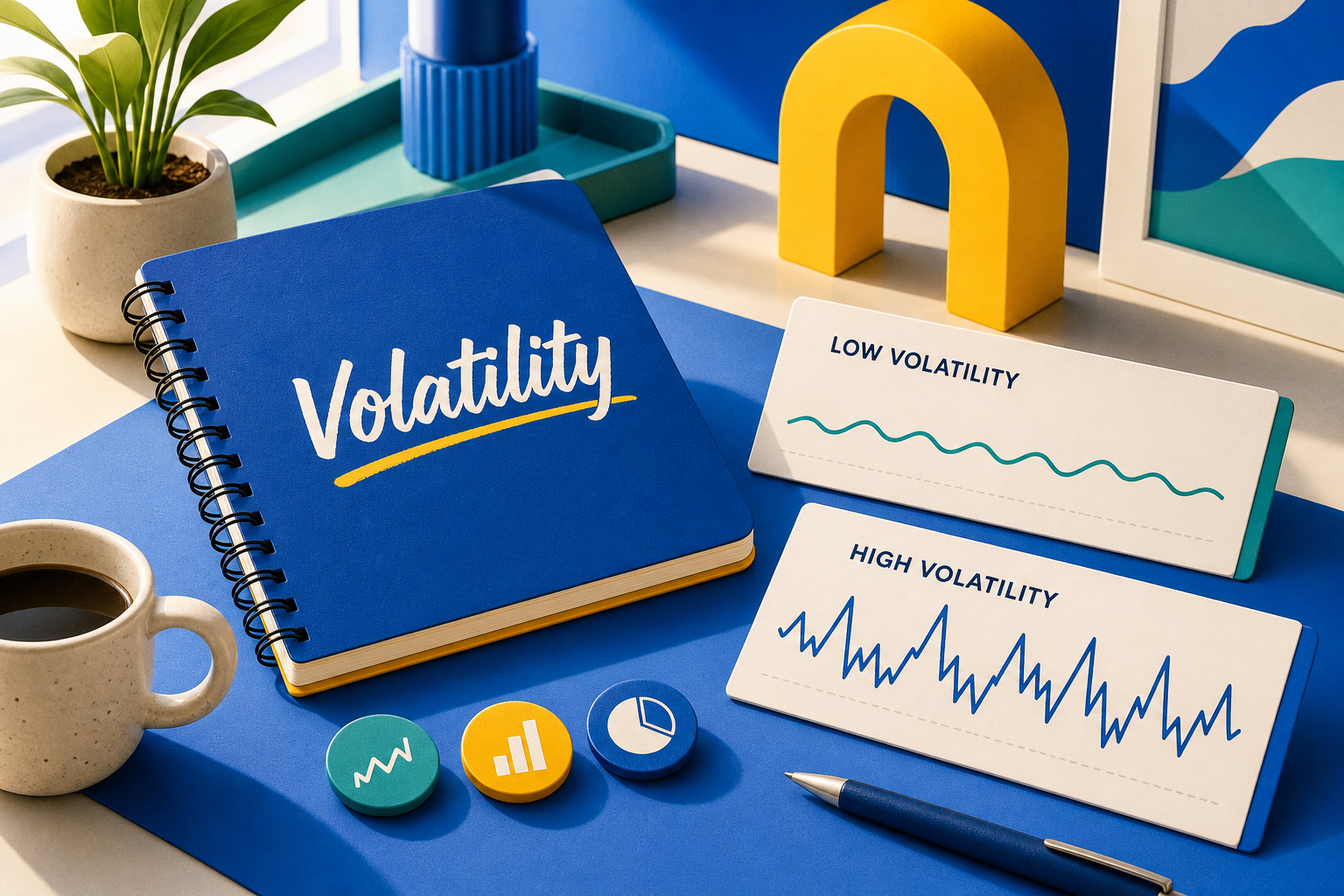
Slot volatility at a sweeps casino describes how wins are spread out on a slot. Low-volatility slots tend to pay smaller wins more often. High-volatility slots tend to pay less often, but wins can be larger when they land. RTP tells long-run return. Volatility tells how bumpy the ride may feel.
By Maya Reed, Sweeps Flow Editor | Updated May 2026
If you have ever played two slots with similar RTP and wondered why one felt chill while the other felt like it woke up and chose chaos, that is usually volatility doing her little math routine. Cute bonus round. Complicated personality.
This guide explains what slot volatility means, how it differs from RTP, and how to choose a volatility level that fits your bankroll, mood, and patience. Terms apply. Sweepstakes casino access and features can vary by state, so check the current site terms before you play.
Quick Take
- Slot volatility means how wins are distributed across spins.
- Low volatility usually means more frequent smaller wins and gentler swings.
- High volatility usually means longer dry spells, with the chance of larger wins.
- RTP and volatility are different. Two slots can have similar RTP and feel very different.
- Your bankroll matters. Smaller bankrolls often fit better with lower-volatility games.
What is slot volatility at a sweeps casino?
Slot volatility, also called variance, is part of a slot’s math model. It describes the pattern of wins. In plain English, it tells you whether a slot is built to give frequent smaller results or less frequent larger ones.
At a sweeps casino, you may see slots played with Gold Coins for social play or Sweeps Coins where eligible. The volatility idea is the same either way. It is about the game’s design, not a promise about what will happen in your session.
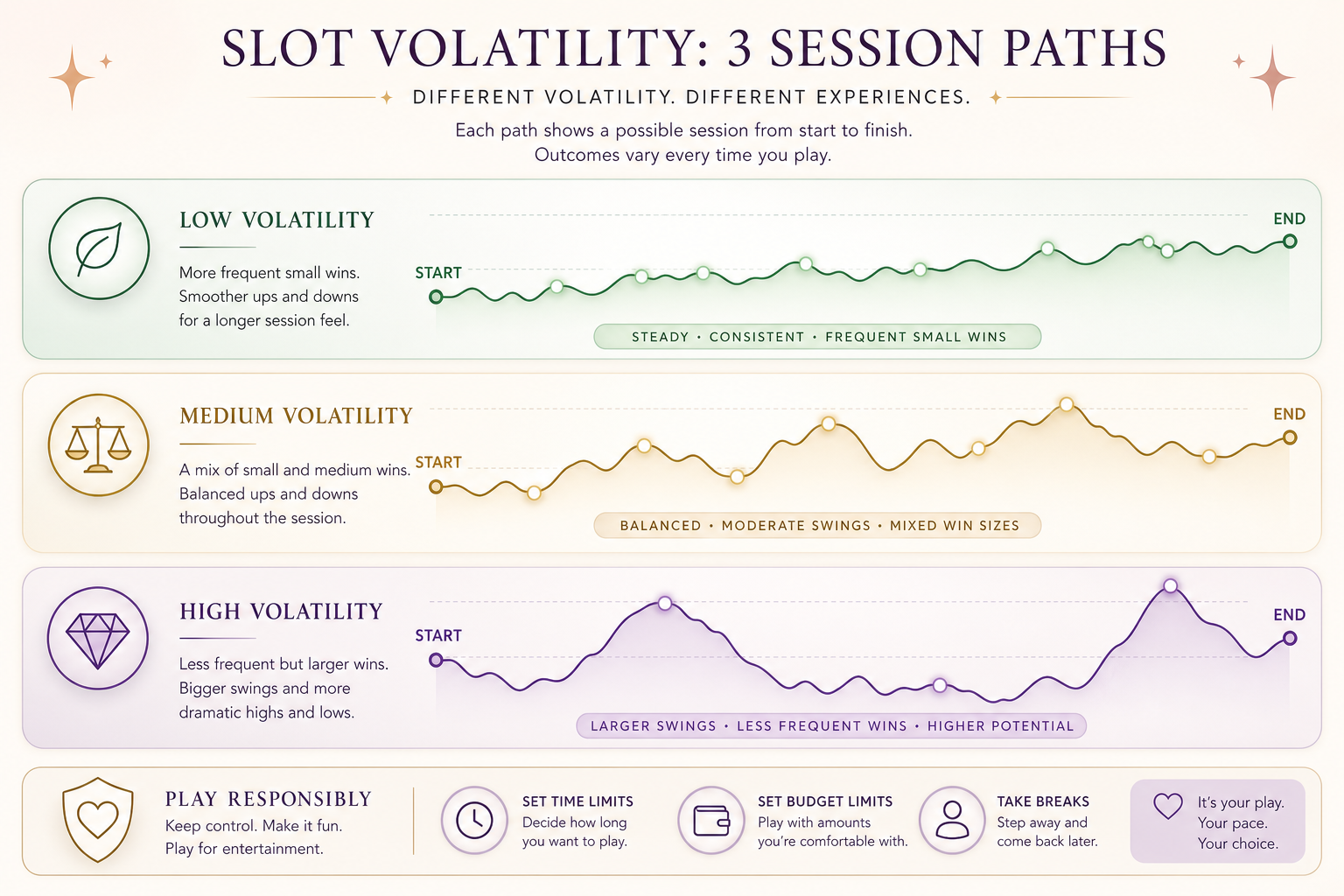
Low-volatility slots tend to feel steadier. You may see more small wins, but they may not change the whole session. High-volatility slots can feel more dramatic. You may sit through longer stretches without much happening, then possibly hit a larger feature or bonus result.
Protective takeaway: Volatility is not a prediction tool. It does not tell you when a slot is “due.” It only helps you understand the type of ride you are choosing.
How is slot volatility different from RTP?
RTP and volatility get mixed up all the time, so let’s clean that up before the terms start doing the most.
RTP stands for return to player. It describes a long-run percentage across a very large number of plays. It is not a session forecast. Volatility describes how wins may show up along the way.
Two slots can have similar RTP numbers but feel nothing alike. One might give lots of small hits. Another might stay quiet for longer, then pay in bigger chunks when it does hit.
| Term | What it tells you | How to use it |
|---|---|---|
| RTP | Long-run return percentage across many plays | Use it to compare the long-run math, not to predict today’s result |
| Volatility | How wins are spread out | Use it to choose a smoother or swingier session style |
| Variance | Another word often used for volatility | Use it as a clue for how bumpy results may feel |
| Hit frequency | How often a spin produces any win | Use it carefully, since a “hit” can still be smaller than the spin amount |
| Max win | The largest possible listed multiplier | Do not treat it as likely. Big listed numbers can be rare |
Responsible play note: RTP and volatility do not remove the chance of losing your session balance. Set a spend limit and stop when that limit is reached.
What are the main slot volatility levels?
Game studios do not all label volatility the exact same way. Some use words like low, medium, or high. Others use a scale, dots, or stars. Still, most volatility labels fit into the same basic pattern.
| Volatility level | Typical win pattern | May fit players who want |
|---|---|---|
| Low | More frequent smaller wins | Longer, steadier sessions with less drama |
| Low to medium | Mostly steady with some medium hits | A calm session with a little sparkle |
| Medium | A mix of smaller wins and occasional bigger moments | A balanced feel |
| Medium to high | More dry spells, with bigger wins possible | More excitement and more patience required |
| High | Less frequent wins, larger swings | A swingier session and a bankroll that can handle quiet stretches |
No level is automatically “better.” The better fit depends on your bankroll, your goal for the session, and how you feel when a game goes cold.
Which slot volatility fits your bankroll?
This is where the math starts acting suspicious, but in a useful way. The smaller your bankroll, the more a dry spell can hurt your session.
If you are playing with a small session budget, low-volatility or medium-volatility games may help your balance last longer. That does not mean you are protected from losses. It means the win pattern is usually less extreme.
If you choose high-volatility slots, go in knowing the dry spells are part of the design. High volatility can be exciting, but it can also drain a session quickly if you are not prepared.
Volatility fit checklist
- If you want a longer session: Start by comparing low or medium-volatility slots.
- If you get frustrated by dry spells: Be careful with high-volatility games.
- If your bankroll is small: Avoid making high-volatility games your default.
- If you want bigger-hit potential: Understand that the tradeoff is less frequent wins.
- If you are unsure: Try medium volatility first and track how the session feels.
Example: Say you have a set session limit and want to play for 30 minutes. A low-volatility slot may give you more spin time because smaller wins show up more often. A high-volatility slot may be quiet for long stretches. Same session limit, very different feel.
For more beginner-friendly math help, Sweeps Flow readers can pair this guide with our RTP explainer at /bestie-explains/rtp and our slot randomness guide at /receipts/are-slots-random.
How do you check slot volatility before playing?
Before you commit a session, take 30 seconds to look for the volatility label. The fine print needs supervision.
- Open the slot info screen. Look for labels like volatility, variance, game info, rules, or paytable.
- Check the game studio’s official page if available. Some studios publish volatility, hit frequency, or max-win details.
- Compare the label with the paytable. Bonus-heavy games, large max-win claims, and jackpot-style features often feel more volatile, but check the official info when you can.
- Do not rely only on vibes. A few spins cannot prove whether a slot is hot, cold, or “due.”
If a game does not show volatility clearly, that is a reason to slow down and compare another option. You do not need to play a game just because it looks cute in the lobby.
Can volatility help with sweepstakes casino strategy?
Volatility can help you choose games that match your session plan. It cannot beat the game, predict a bonus, or tell you when to stop because a win is coming.
Use volatility as a planning tool:
- Pick lower volatility when you want steadier play.
- Pick medium volatility when you want balance.
- Pick higher volatility only when you accept bigger swings.
- Set your session limit before you start.
- Never raise your spend because a slot “has to hit soon.” It does not.
For more on why slots are not due to hit, read /receipts/are-slots-due-to-hit.
What about Sweeps Coins, Gold Coins, and no-purchase play?
Sweepstakes casinos usually offer Gold Coins for social casino play and Sweeps Coins that may be used for promotional sweepstakes play where allowed. Many sweepstakes models also include a no-purchase-necessary route, often called AMOE, which means Alternative Method Of Entry.
Volatility still matters because it affects the feel of the slot session, no matter which coin type you are using. Always read the current rules for the specific site, including eligibility, state restrictions, redemption requirements, and AMOE instructions. Terms apply.
If you are new to the sweeps model, start with Sweeps Flow’s beginner resources or create an account at https://www.sweepsflow.com/register when you are ready to explore. Keep it fun, budgeted, and fully optional.
What to do next
- Open a slot you already play and find its volatility label.
- Write down whether it is low, medium, or high volatility.
- Compare that label to how the game felt in your last session.
- If the swings felt stressful, try a lower-volatility game next time.
- Set a session limit before you start and stop when you reach it.
Sweeps Flow Take
Slot volatility is one of the most useful things to check before you play. RTP tells you the long-run math. Volatility tells you whether the session may feel smooth, balanced, or bumpy.
Our bestie advice: match the game to your bankroll, not your fantasy bonus round. Low volatility can be a better fit for smaller budgets and longer sessions. High volatility can be exciting, but it needs patience and a firm stop point. What is slot volatility at a sweeps casino? It is your heads-up about the ride before you press spin.
FAQs
Is high volatility better than low volatility?
No. High and low volatility are different styles, not automatic upgrades. High volatility has bigger swings and less frequent wins. Low volatility usually feels steadier with smaller results. Pick based on your bankroll and comfort with dry spells.
Can a low-volatility slot still lose?
Yes. Low volatility does not mean protected. It only means the game is usually designed for more frequent smaller wins. You can still lose your session balance, so set limits before you play.
Can two slots have the same RTP but different volatility?
Yes. Two slots can have similar RTP and feel very different. One may spread wins out in smaller pieces. Another may hold more of its value in rare features or larger hits.
Where can I find a slot’s volatility?
Start with the slot’s info screen, paytable, or rules section. If it is not listed there, check the game studio’s official page when available. If you still cannot find it, consider choosing a game with clearer information.
Does volatility mean a slot is due to hit?
No. Volatility does not create a schedule for wins. A high-volatility slot can have long dry spells, but that does not mean a win is coming soon. Treat each session as uncertain and play within your limit.
Affiliate disclosure: Sweeps Flow may receive compensation from some operator links. Our guides stay editorial, and we put player protection before sign-ups.

Error